


Frequently Asked Questions
Choosing the Right AI
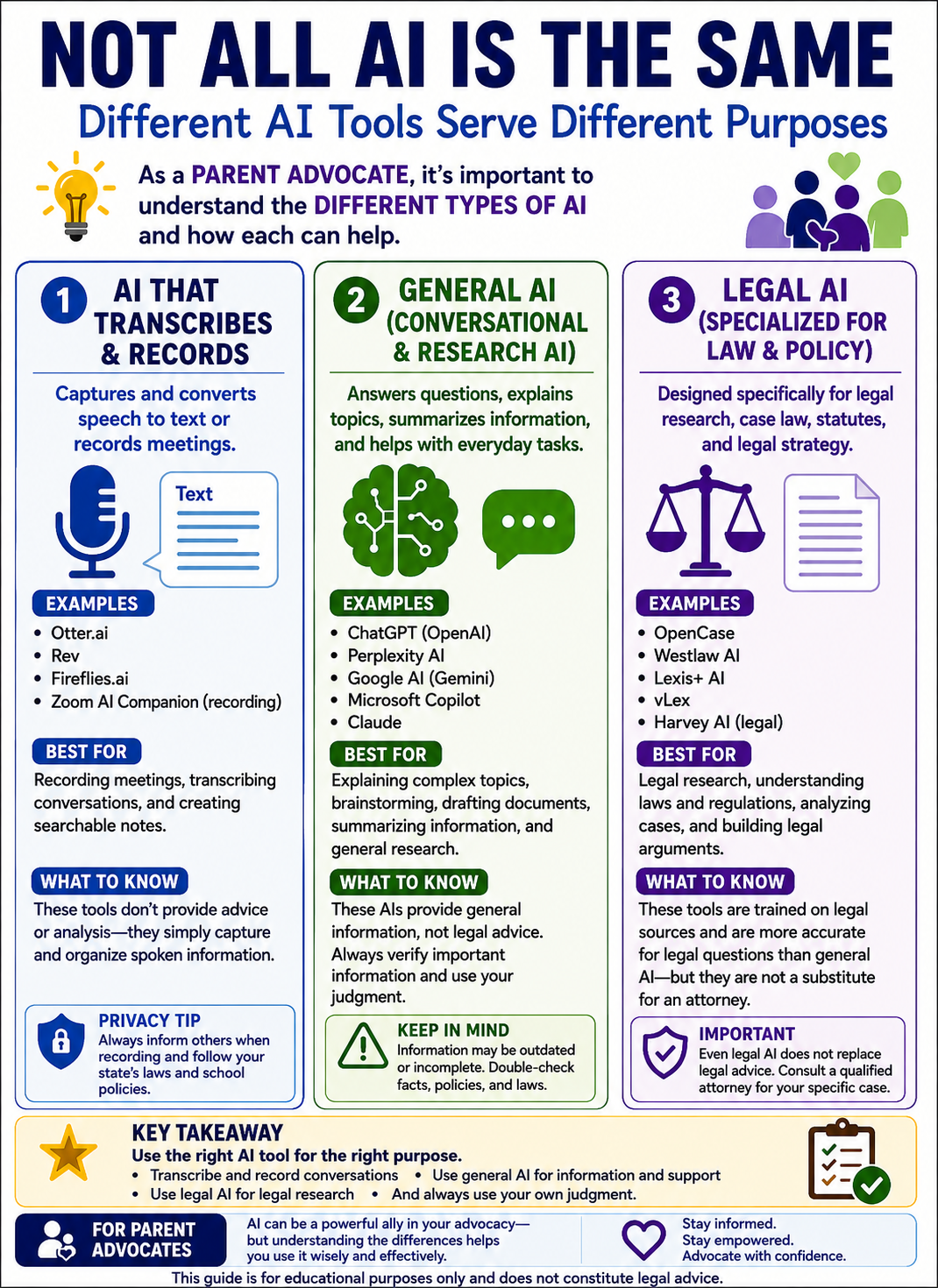
Not all AI tools serve the same purpose. Understanding the difference between transcription AI, general AI, and legal AI can help parents choose the right tool for documenting meetings, researching information, and strengthening their advocacy efforts.
AI Prompt Toolkit
AI is a powerful tool, but the quality of its answers depends largely on the information and instructions you provide. This toolkit helps parents learn how to write effective prompts, organize information, fact-check results, and use AI more confidently in their advocacy efforts.
How Do I Fact-Check AI Answers?
AI is a powerful tool, but the quality of its answers depends largely on the information and instructions you provide. This toolkit helps parents learn how to write effective prompts, organize information, fact-check results, and use AI more confidently in their advocacy efforts.
Free vs. Paid AI
Many AI tools offer free versions that can be helpful for basic questions, summaries, and research. Paid versions often provide access to more advanced models, longer conversations, document analysis, improved reasoning, additional features, and higher usage limits, but no AI is perfect, fact-checking remains important regardless of whether the tool is free or paid.
Privacy & AI
AI can be a valuable advocacy tool, but users should be thoughtful about what information they share. Before uploading documents, consider removing personal information such as student names, dates of birth, addresses, student ID numbers, medical information, and other sensitive details whenever possible.
Can AI Be Wrong?
Yes. AI can provide inaccurate information, misunderstand context, miss important details, or present incorrect conclusions with confidence. AI is best used as a research and organizational tool, but parents should always verify important facts, review sources, and use their own judgment when making decisions that affect their child.
Links
PAU is a parent-led advocacy organization and does not provide legal advice. Information provided through the Resource Center is educational in nature and should not be considered legal, medical, or professional advice.